Build the channel before building the audience.
The project started before launch, without an SEO history, topical authority or an established organic acquisition engine. Search requirements needed to become part of the product and publishing workflow from the outset.
The starting point
No mature search channel, no search-optimized publishing templates and no established AI-search visibility.
The business objective
Create scalable audience acquisition, durable content coverage and monetizable sessions that support ad revenue growth.
A technical foundation. A repeatable editorial system.
Build SEO into the product
Defined sitemap architecture, robots.txt, crawlability and indexability requirements. Established URL structures, canonical logic, schema and page-template rules, and worked with developers on performance and the transition from client-side to server-side rendering.
Capture attainable search demand
Researched long-tail queries, low-to-medium competition topics and competitor coverage gaps. Organized priority subjects into pillar pages and supporting clusters, with contextual internal links.
Make the newsroom part of the system
Trained journalists on an SEO content checklist, reviewed articles and worked with writers before and after publication. Editorial review loops made the strategy repeatable across publishing.
Build relevant authority and credibility
Used a focused link-building budget of approximately $1.5K for quality-led placements, reclaimed unlinked brand mentions and pursued relevant citation opportunities. Author profiles, reliable sources and original analysis strengthened content credibility.
Organic visibility scaled materially.
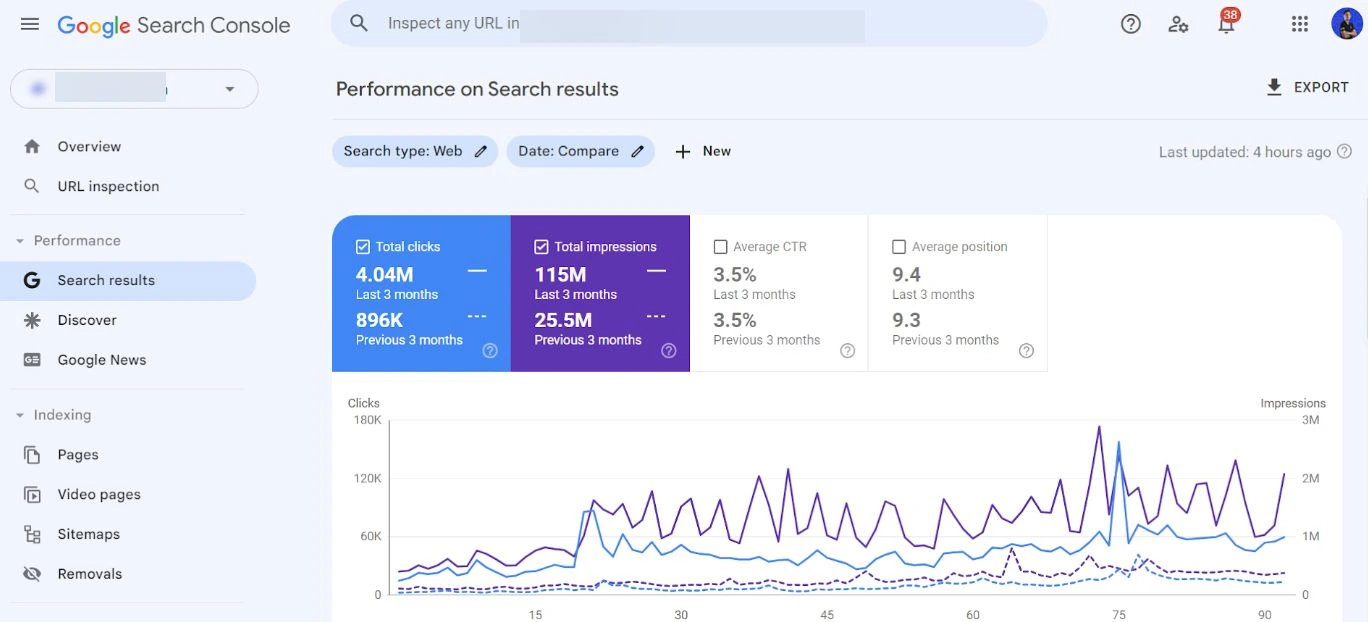
The Google Search Console comparison shows 4.04 million clicks over three months, against 896,000 in the previous three-month period. Impressions reached 115 million, compared with 25.5 million.
| Metric | Comparison period | Reported period | Change |
|---|---|---|---|
| Organic clicks | 896K | 4.04M | +351% |
| Search impressions | 25.5M | 115M | +351% |
Make content easy to find, extract and trust.
The AEO program uses four layers to improve how content can be discovered, understood and cited by generative search systems.
Discoverability
Technical accessibility, internal links, topic clusters and clear entity context help systems find the relevant content.
Understanding
Answer-first openings, semantic headings and focused sections reduce ambiguity at passage level.
Extractability
Standalone answer blocks, concise summaries, tables and bullets make useful information easier to reuse.
Citability & trust
Evidence, reliable sourcing, transparent methodology, journalist expertise and original analysis support citation potential.
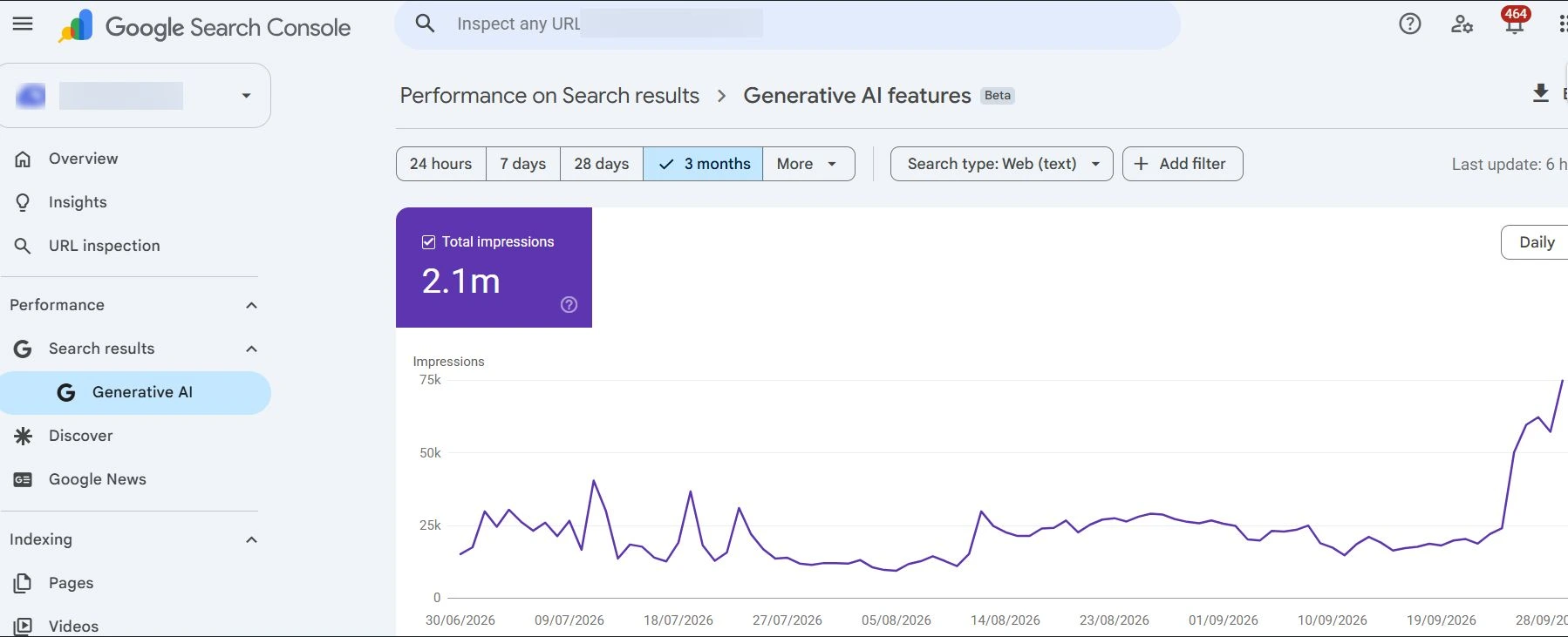
The presentation reports 2.1 million generative AI impressions, with peak daily impressions of approximately 50,000–75,000.
Visibility became monetizable demand.
The commercial objective connected the SEO foundation to qualified organic audiences, monetizable sessions and advertising revenue contribution. The presentation reports approximately 300% growth in Google ad monetization revenue.
Build the foundation. Grow useful content. Turn discovery into business value.
The principle behind the workTechnical execution, editorial processes and authority building worked together as a growth program. The reported revenue result is a business outcome; it is not an isolated attribution estimate for any single SEO change.
Explore the complete story.
The original case study
Explore all 10 slides, including the strategy, supporting analytics and reported outcomes.
Download PDF ↓